“Parents Are the ‘Gatekeepers’ for Their Children”
March 12, 2026
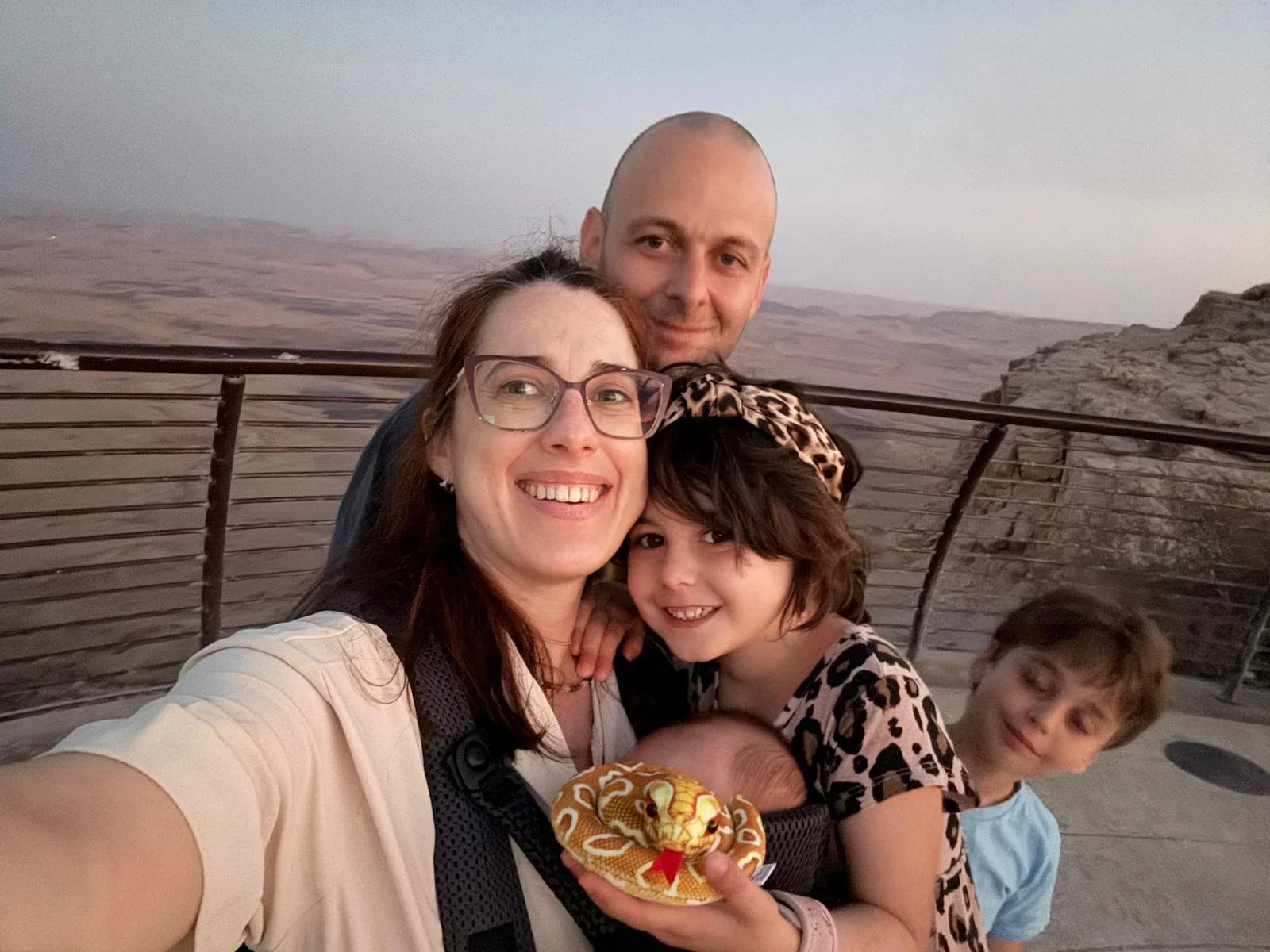
Anna Lev, the mother of Noga, who was diagnosed with glioblastoma, and a hemato-oncology nurse by profession,
shares her experience coping with the disease, the fears, the treatment dilemmas, and the important role parents play in managing their child’s illness.
In March 2024, four-year-old Noga began complaining of headaches. “We had a bad feeling,” Anna recalls. “We took her to the urgent care and to our health clinic, and when things were delayed, we went to the ER. There, they performed a CT scan and discovered a 5 cm mass.”
Within 12 hours, Noga was already in surgery at the Dana Children’s Hospital to remove the tumor. Based on the biopsy, Noga was diagnosed with glioblastoma—a relatively rare tumor in children.
How did you react at the moment of diagnosis?
“It was very difficult. I’m a hemato-oncology nurse, so I have some understanding of the professional world. As soon as I was told there was a mass, I knew it was serious. After the surgery, in the department, I kept looking for children with scars similar to Noga’s so I could talk to parents who had gone through the same thing. I spoke with mothers of children with leukemia, but I understood it wasn’t the same—it’s different. I really searched for someone going through what we were going through. We were like ghosts for a month or two.”
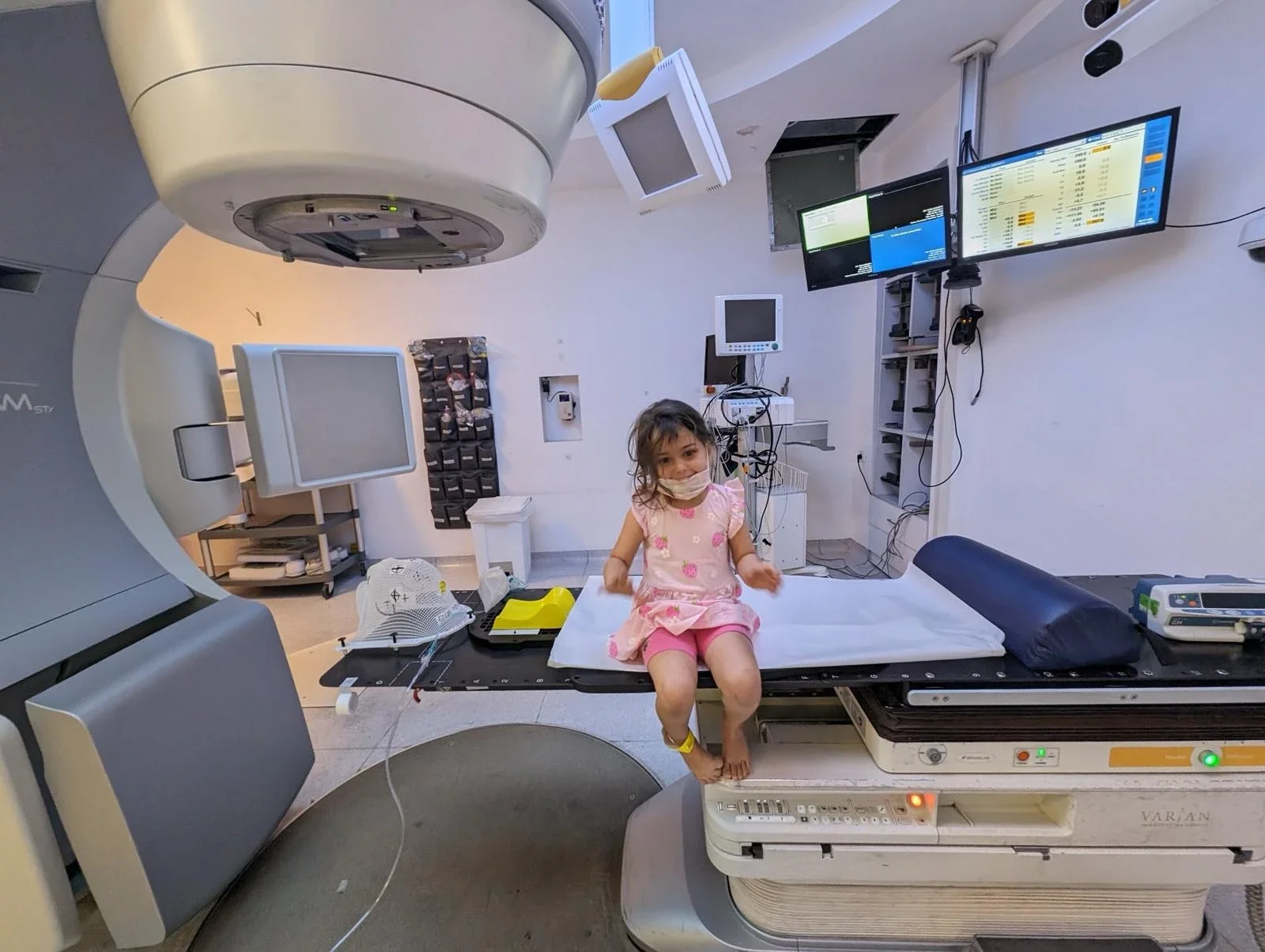
After the surgery, Noga was treated according to the standard protocol, which included radiation and chemotherapy. However, by September of that same year, the tumor had already recurred, and she underwent another surgery.
“We realized the standard treatment hadn’t worked and started asking ourselves, ‘What do we do now?’ We were in a major crisis point—feeling helpless. We asked ourselves if everything was lost. From that point, we began doing in-depth research. We reached out to every hospital we could, started reading extensively online, and that’s how we found the ‘MyChild’sCancer’ organization.”
What was the process like with MyChild’sCancer?
“I left a message, and Mariana from the organization got back to me. She is our angel. She arranged a meeting with a doctor from Germany, Professor Stefan Rutkowski (University Medical Center Hamburg-Eppendorf), a specialist in brain tumors. The goal was to make a joint decision about the next stage of treatment at this critical crossroads, after we had already seen that the standard protocol hadn’t worked.
I want to emphasize—I would never have reached Professor Rutkowski any other way. I wouldn’t have even known about him. This was extremely significant because the treatments we were considering were all experimental, and we had to choose without sufficient information about how they would affect our daughter.
At the same time, our local doctor preferred not to pursue experimental paths without enough data, in order to protect our daughter, and we had many discussions with her about this.”
How did the consultation help you?
“Our doctor also participated in the call, and they had a professional discussion about the treatment. She came with a direction toward a specific medication, and he validated it and added two more drugs. That combination has been her treatment since December 2024—and it’s working.
If we hadn’t had that consultation, she probably would have received only one of those medications. Their discussion led to this solution, and to our great joy, we’ve now had a clean MRI for a year.”
How did the consultation help you as parents managing your daughter’s illness?
“It’s important to understand that because the disease is rare, there are very few children with it in our country, so doctors here have seen very few cases. Because of that, we constantly feared we might be missing something in the treatment.
The consultation gave us a sense of confidence in the treatment plan. We faced many dilemmas because there are so many trials, all involving extremely expensive drugs, and there’s no certainty how they will truly affect the child or how difficult the treatment will be for her.
The question of how far to go and how bold to be with treatment was always with us. The consultation allowed us to choose a treatment that, while experimental, was thoughtful and measured—without feeling like we were experimenting on our child. And so far, it is indeed saving her.”
How did your professional background as an oncology nurse influence things?
“As an oncology nurse, I knew the professional language and how to search for information in certain sources. In the first protocol, for example, I asked to add a specific medication I knew could help.
In my role, I worked in a bone marrow transplant unit, where the approach is to use aggressive treatments. That’s not necessarily appropriate for brain tumors, and it didn’t fully align with our doctor’s approach, which seeks a good balance between treatment and preserving Noga’s quality of life.
There’s an ongoing back-and-forth between us about balancing medication and quality of life, and we have many discussions about it.”
How has Noga been affected?
“It has changed her a lot—she’s a hero. She taught us her limits. For example, she does CT scans without anesthesia because she’s afraid of injections. She showed us how important it is for her to feel in control.
Even in trauma rooms after surgeries, with all the tubes connected to her, she insists on going to the bathroom to urinate. We try very hard to respect her wishes.”
How has the illness affected your family life?
“The illness made us realize that we don’t know what tomorrow will bring, and that it’s important to live in the present.
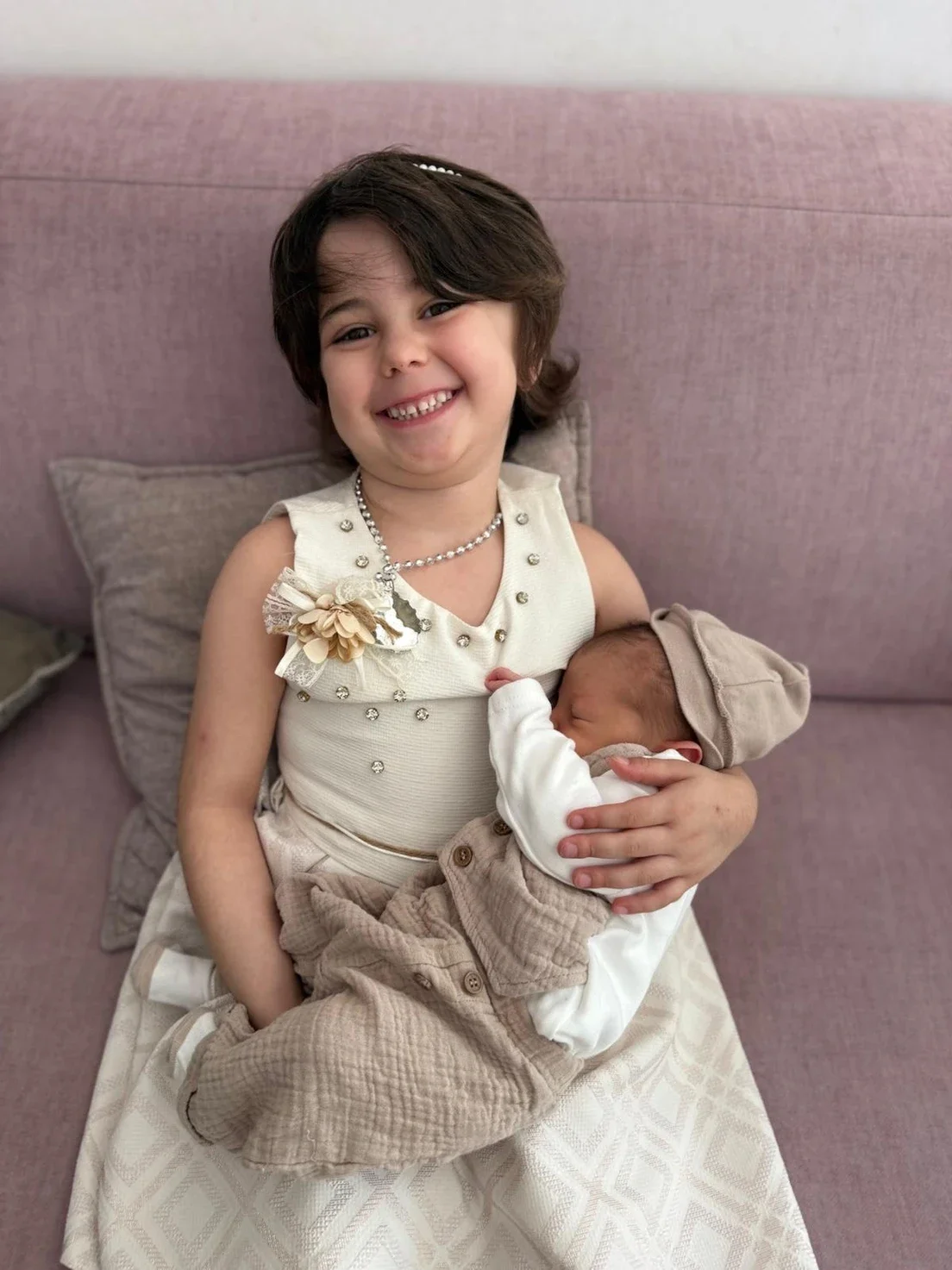
As a result, our family grew—we welcomed Eitan, who is now five months old, a younger brother to Noga and Yuval.
We also just bought tickets to Thailand. Maybe three years ago we wouldn’t have done that—we would have considered costs and other factors. But now we understand that family experiences are more important than other things, because we don’t know what tomorrow will bring. We embrace the ‘here and now.’”
What do you recommend to parents who are currently at the diagnosis stage?
“I think doctors are smart, knowledgeable, and experienced—but they are still human. Parents have a responsibility to be brave and ask questions, respectfully of course, and always ask what more can be done.
Parents are the ‘gatekeepers’ for their children. In addition, we as parents know our children best. When a child feels unwell, a doctor may not necessarily see it in a 10-minute appointment—but parents will. So we have both the place and the responsibility to act.”